


Choosing an ultrasonic plastic welder starts with understanding your product. The plastic material, joint design, component dimensions, and production requirements all influence which welding system will work best.
For suitable thermoplastic assemblies, ultrasonic welding creates permanent joints without adding adhesives or screws. However, reliable production requires more than selecting a machine by power rating. The equipment, welding horn, fixture, and process settings must work together.
At Sinceresonics, our ultrasonic plastic welder range includes servo-controlled machines, digital pneumatic welders, handheld spot welders, and systems for automation. This guide explains how to compare these options and prepare for an application-based quotation.
What Is an Ultrasonic Plastic Welder?
An ultrasonic plastic welder uses high-frequency mechanical vibration and pressure to join compatible thermoplastic components.
During welding, a horn transfers vibration into the workpiece. Energy concentrates at the joint, generating localized heat that softens or melts the plastic. Pressure is maintained after vibration stops, allowing the joint to solidify.
The main components typically include:
- Ultrasonic generator: Supplies high-frequency electrical energy.
- Transducer: Converts electrical energy into mechanical vibration.
- Booster and horn: Adjust and deliver vibration to the component.
- Fixture: Supports the parts and maintains their position.
- Actuator and control system: Manage force, movement, and the welding sequence.
The result depends on how effectively this complete system delivers energy to the intended joint.
Which Type of Ultrasonic Plastic Welder Should You Choose?
Different production tasks require different levels of motion control, tooling access, and integration. The following Sinceresonics product families offer several starting points for equipment selection.
| Production requirement | Product family to evaluate | Key features |
|---|---|---|
| Programmable speed and pressure control | iSF Series | Servo control, nine-stage speed and pressure control, seven welding modes |
| Digital control with pneumatic actuation | iBA Series | Proportional valve technology, digital amplitude settings, process data functions |
| Large thermoplastic components | iAL Series | 15 kHz platform, rigid machine structure, automatic frequency tracking |
| Manual access to individual weld points | GSH Series | Handheld design, 20 or 35 kHz options, time and energy modes |
| Integration with automation equipment | iSG Series | Modular structure, digital amplitude settings, configurable functional modules |
The final selection should follow a review of your actual parts and acceptance requirements.
Servo Ultrasonic Plastic Welder: iSF Series
The iSF Series servo ultrasonic plastic welder is an option for applications requiring programmable control over the welding sequence.
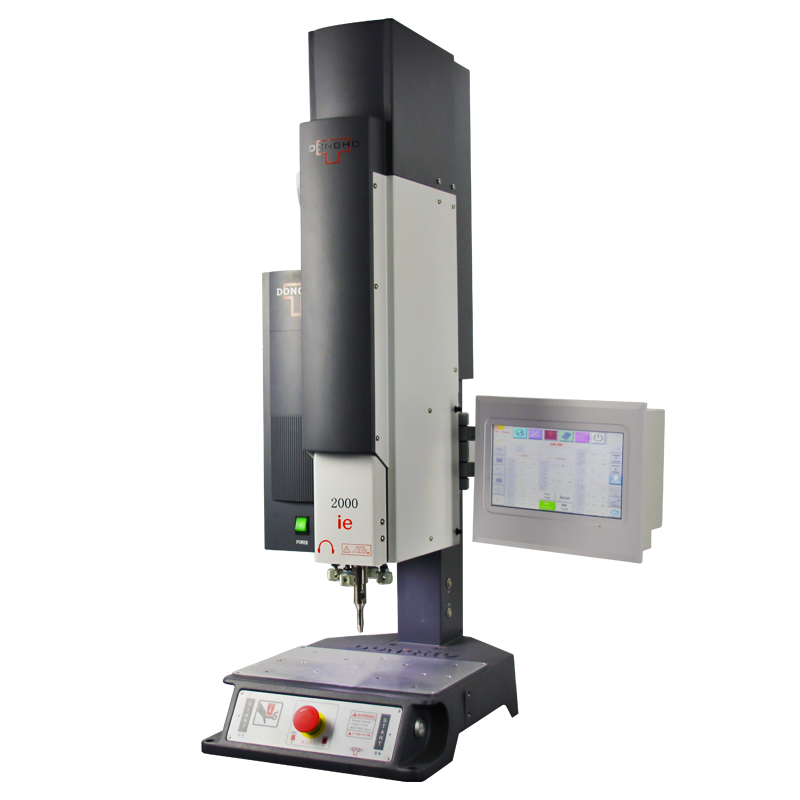
Key listed features include nine-stage speed and pressure control, QA diagnostic control, and USB storage of welding parameters. The controller provides seven welding modes:
- Time
- Relative position
- Absolute position
- Energy
- Peak power
- Maximum pressure
- Grounding detection
For a buyer, the practical question is simple: which of these controls helps you hit your joint strength, size, and appearance targets? Review those requirements early to decide whether servo control fits your application.
Digital Pneumatic Ultrasonic Plastic Welder: iBA Series
The iBA Series digital pneumatic ultrasonic plastic welder combines a digital generator, controller, and welding bench. Its listed features include:
- Proportional valve technology with electronic pressure measurement
- Digital amplitude setting and amplitude segmentation
- USB parameter storage, Ethernet connectivity, and multi-level password protection
The iBA Series is worth evaluating when your process needs pneumatic actuation plus digital settings and traceability. Confirm the exact connectivity and configuration during quotation.
Ultrasonic Plastic Welder for Large Parts: iAL Series
Large components require careful consideration of machine clearance, tooling dimensions, fixture support, and the area to be welded.
The iAL Series 15 kHz ultrasonic plastic welder is designed for large-part applications. Its listed features include digital amplitude setting, automatic frequency tracking and locking, welding parameter recording, and QA diagnostic control.
Component size alone does not decide weldability. Joint layout matters just as much — the machine must deliver vibration evenly across the whole weld area.
Handheld Ultrasonic Plastic Spot Welder: GSH Series
Some assemblies require flexible access to individual weld locations.
The GSH Series handheld ultrasonic plastic spot welder is built around an ergonomic handpiece with digital generator technology:
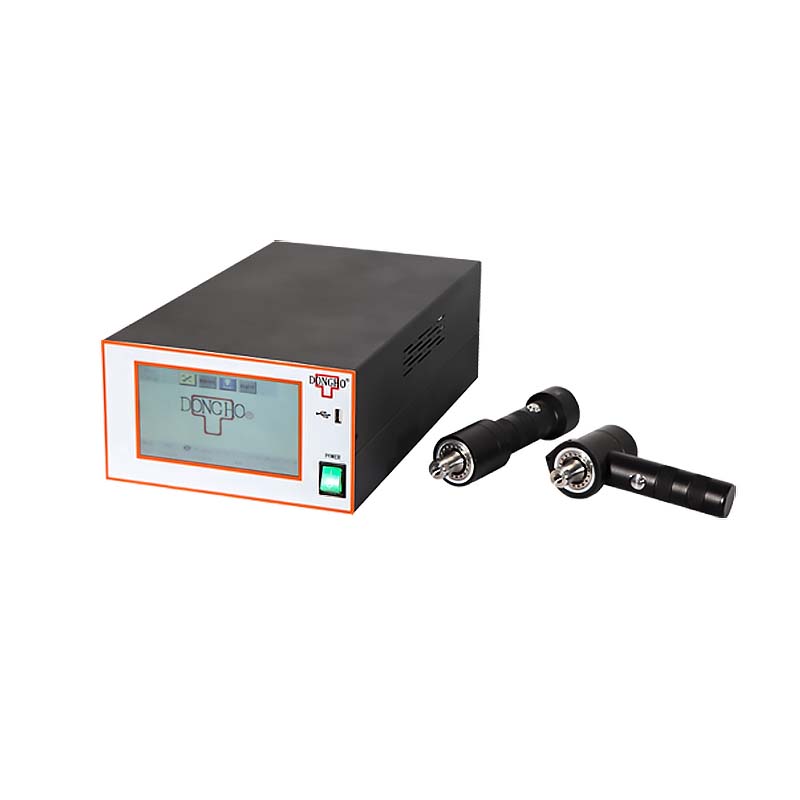
- 20 kHz and 35 kHz frequency options
- Time and energy welding modes
- Typical uses: localized spot welding and riveting
When evaluating a handheld system, check operator access, part support, positioning consistency, and the production rate you need.
Ultrasonic Welding Systems for Automation: iSG Series
Automated production requires the welding equipment to fit into a wider sequence of loading, positioning, welding, and inspection.
The iSG Series ultrasonic welding system is designed for use with robots and supporting automation equipment. Its listed features include a modular structure, digital amplitude settings, and automatic identification of configured functional modules.
Before selecting an automation system, define the number of welding stations, control requirements, material flow, and planned changeovers.
Five Factors That Determine the Right Machine
1. Plastic Material and Compatibility
Ultrasonic welding is primarily used for compatible thermoplastics. The exact material grades matter: additives, fillers, moisture, and differences between mating materials can affect the welding process.
Provide the material designation for each component, rather than a general description such as “plastic housing.” Representative molded samples also help establish whether the proposed joining process is suitable.
2. Joint Design and Part Support
The joint must allow energy to concentrate where the connection is needed. An energy director or another suitable joint feature may be required, depending on the material and assembly design.
The fixture must support the component while allowing consistent horn contact. Poor alignment, unsupported areas, or varying fit between parts can make process development more difficult.
Review the joint and tooling together before finalizing the equipment specification.
3. Frequency, Amplitude, and Power
Frequency, amplitude, and power describe different aspects of ultrasonic welding:
- Frequency is the rate of vibration.
- Amplitude is the vibration displacement.
- Power is the energy the system can supply during welding.
Selecting the highest available power does not automatically produce a better joint. The correct combination depends on the material, part geometry, horn design, and process requirements.
4. Process Control and Quality Requirements
Define what an acceptable finished assembly looks like before choosing control features. Typical quality targets include:
- A specified joint strength
- A controlled assembly height
- Minimal surface marking
- Verified sealing performance
These requirements help determine which welding modes and monitoring functions are useful. Process records can support production monitoring, but acceptable machine readings should be linked to actual part testing.
5. Production Volume and Integration
Evaluate the complete production cycle, including loading, positioning, welding, holding, unloading, and inspection. Match the equipment type to the job:
- A handheld tool suits accessible, localized operations.
- A dedicated press suits repeated assembly of the same component.
- An integrated welding system suits automated handling or multiple stations.
How Much Does an Ultrasonic Plastic Welder Cost?
The price depends on the complete application and equipment scope.
Factors to include in a quotation are:
- Machine type and control configuration.
- Required frequency and power.
- Custom welding horn and fixture.
- Application testing and process development.
- Guarding or acoustic enclosure requirements.
- Automation, communication, and data functions.
- Installation, training, and service scope.
Compare quotations using the same requirements. A machine-only price and a complete production solution may cover substantially different deliverables.
For a useful estimate, send your part information and production requirements through the Sinceresonics contact page.
Why Work with Sinceresonics?
Sincere Sonics (Suzhou) Co., Ltd. is the global operation center of Dongho Ultrasonics, providing ultrasonic equipment and services to international customers.
Our product range allows buyers to evaluate different approaches, including servo-controlled welding, pneumatic systems, handheld operation, and automation integration. We also offer machine and tooling customization according to application requirements.
The starting point is your assembly: what materials you use, how the parts fit together, and what the finished product must achieve. These details help guide the discussion toward an appropriate equipment configuration. Learn more about our company and capabilities on the Sinceresonics website.
Frequently Asked Questions
Can an ultrasonic plastic welder weld all plastics?
No. Suitability depends on the material grades, compatibility of the mating parts, and assembly design. Confirm the materials and evaluate representative samples before selecting equipment.
What is the difference between servo and pneumatic ultrasonic welding machines?
A servo system uses an electric servo drive to control actuator movement. A pneumatic system uses compressed air. The available force, motion, and monitoring functions depend on the specific machine design. Sinceresonics offers the iSF servo and iBA pneumatic product families for evaluation.
Is a handheld ultrasonic welder suitable for production?
It can be suitable for localized operations where tool access and flexibility matter. Required output, operator consistency, and part support should be assessed. The GSH Series is an option for handheld spot welding applications.
Can ultrasonic welding produce a sealed plastic joint?
Suitable materials and joint designs can produce sealed assemblies, but sealing performance must be verified. Define the leak-test method and acceptance criteria during application evaluation.
What information should I provide for a quotation?
Provide part drawings or photographs, material grades, component dimensions, expected production volume, and joint requirements. Include any automation, data recording, or tooling needs.
Find the Right Ultrasonic Plastic Welder for Your Product
The right ultrasonic plastic welder is the one that fits your material, joint design, quality targets, and production process.
Whether you are evaluating a servo machine, a pneumatic press, a handheld tool, or an automated welding system, start with a clear application specification.
Contact Sinceresonics with your drawings, material details, and production requirements to discuss a suitable welding solution and request a quotation.
FAQ
How much does an ultrasonic plastic welder cost?
It depends on the drive type, power, control level and the tooling your part needs — we quote every application individually after a free trial weld. Our price guide explains what determines the final number and how to get a quotation fast.
Which frequency should I choose?
15 kHz for large or thick parts, 20 kHz as the general-purpose standard, 35–40 kHz for small or delicate components. Our frequency comparison explains the trade-offs in detail.
Who builds the machines?
Sinceresonics is an ultrasonic welding machine manufacturer in China — generators, transducers and horns are built in-house, and OEM projects are welcome.
Can the same machine remove injection-molded gates?
The same platform powers dedicated ultrasonic degating machines — clean gate removal in under a second.